
The economy of India is characterized as a middle income developing market economy or mixed economy. It is the world’s sixth-largest economy by nominal GDP and the third-largest by purchasing power parity (ppp). According to the international Monetary fund (IMF), on a per capita income basis, India ranked 142nd by GDP (nominal) and 124th by GDP (ppp) in 2020. From independence in 1947 until 1991, successive governments promoted protectionist economic policies with extensive state intervention and economic regulation, which is characterized as dirigisme, in the form of the license raj. The end of the cold war and acute balance of payments crisis in 1991 led to the adoption of a broad economic liberalization in India. Since the start of the 21st century, annual average GDP growth has been 6% to 7%, and from 2014 to 2018, India was the world’s fastest growing major economy, surpassing china. Historically, India was the largest economy in the world for most of the two millennia from the 1st until the 19 century.
India must
take three steps "immediately" to stem the damage of the corona virus
pandemic, according to its former Prime Minister Manmohan Singh.
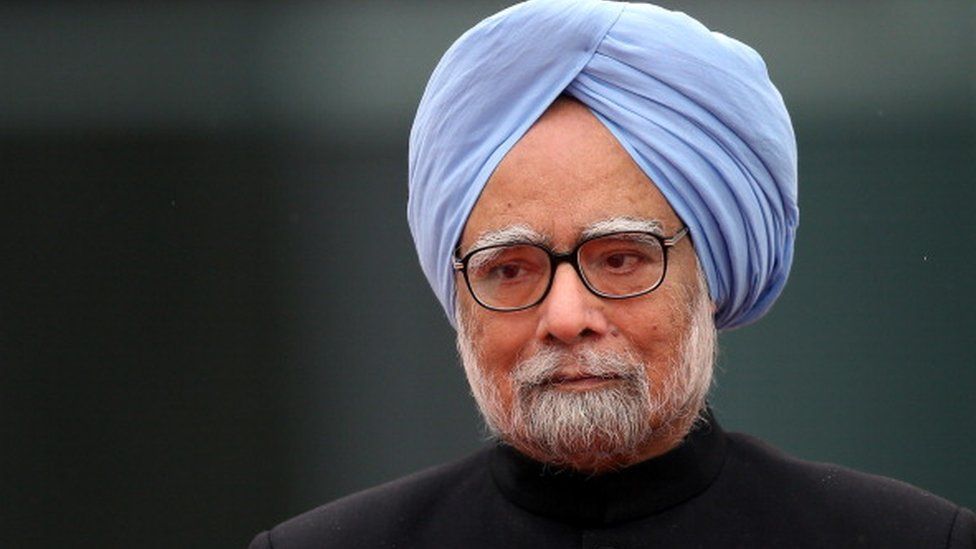
Dr manmohan Singh, who is widely regarded as the architect of India's economic reforms programme.
He laid out three steps he believes the government has to
take to stem the crisis and restore economic normalcy in the coming years.
First, the government should "ensure people's
livelihoods are protected and they have spending power through significant
direct cash assistance".
Second, it should make adequate capital available for
businesses through "government-backed credit guarantee programmes".
Third, it should fix the financial sector through
"institutional autonomy and processes".
India's economy was already in the throes of a slowdown
before the beginning of the pandemic - GDP grew at 4.2% in the 2019-20, its
slowest pace in nearly a decade. The country is now gradually unlocking its
economy after a prolonged and grinding shutdown, but the future looks uncertain
as infection numbers rise. On Thursday, India became the third country to pass
two million Covid-19 cases.
Economists have since warned that India's GDP for the 2020-21 financial year is likely to contract sharply, leading to the worst technical recession since the 1970s.
"I do not want to use words like 'depression' in a
cavalier fashion," Dr Singh said, but a "deep and prolonged economic
slowdown" was "inevitable".
"This economic slowdown is caused by a humanitarian
crisis. It is important to view this from the prism of sentiments in our
society than mere economic numbers and methods," he said.
Dr Singh pointed to a consensus forming among economists
over an economic contraction in India in nominal terms, "which if it
happens, will be the first time in independent India".
"I hope the consensus is wrong," he said.
India locked down early, at the end of March, to prevent the
spread of the corona virus. Many believe the lockdown was hastily executed and
did not anticipate the exodus of millions of out-of-work migrant workers from
cities.
Dr Singh believes India did what other nations were doing,
and "perhaps a lockdown at that stage was an inevitable choice".
"But the government's shock and awe approach to the
lockdown has caused tremendous pain to people. The suddenness of the
announcement and the stringency of the lockdown were thoughtless and
insensitive," he said.
"Public health emergencies such as this are best dealt with locally by local administrators and public health officials, with broad guidelines from the Centre. Perhaps, we should have devolved the Covid-19 battle to the state and local administrations much sooner."
As finance minister, 29 years ago, Dr Singh helmed an
ambitious economic reform programme in 1991 after a balance of payments crisis
nearly plunged India into bankruptcy.
The 1991 crisis was a domestic crisis induced by global
factors, he said. "But today's economic situation is unprecedented in its
ubiquity, scale and depth."
Not even during World War Two had the "whole world shut
down in such a synchronised fashion as it is now", he said.
In April Narendra Modi's BJP-led government announced a
$266bn (£212bn) stimulus, including a range of liquidity measures and reforms
to kickstart the economy. India's central bank also introduced rate cuts and
moratoriums on loans.
With tax receipts plummeting, economists have debated about
how a cash-strapped government would be able to get the money to fund direct
transfers and provide more capital to ailing banks and credit to businesses.
The answer, said Dr Singh was borrowing.
"Higher borrowing is inevitable," he said.
"Even if we have to spend an additional 10% of the Gross Domestic Product
(GDP) to cater to the military, health and economic challenges, it must be
done.
He acknowledged that it would increase India's debt to GDP
ratio, but if borrowing "can save lives, borders, restore livelihoods and
boost economic growth, then its worth it", he said.
"We must not be shy of borrowing but we must be prudent on how we use that borrowing," he said.
In the past, taking loans from multilateral institutions
like the IMF and World Bank have been taken as signs of India's economic
weaknesses. But now India could "borrow from a position of strength,
compared to other developing nations," Dr Singh said.
"India's track record as a borrower from multilateral
institutions is impeccable, It is not a sign of weakness to borrow from these
institutions."
Many countries have decided to print money to fund
government spending to tide over the ongoing economic crises, and some
prominent economists have suggested the same for India. Others have raised
fears about excess supply of money leading to inflation.
Monetization of the fiscal deficit directly by India's
central bank used to be norm until the mid 1990s. India, Dr Singh said, had
moved away from the practice to bring about "fiscal discipline,
institutional separation from the Reserve Bank of India [central bank] and the
government and to curb unhealthy impulses of seemingly frees money".
"I am aware that the traditional fear of high inflation
due to excess money supply is perhaps no longer valid in developed
nations," he said. "But for countries such as India, other than costs
of institutional autonomy of the central bank, unbridled printing of money can
have attendant impacts on currency, trade and imported inflation."
Dr Singh said he was not ruling out printing money to
finance the deficit, but "merely suggesting that let the barrier for that
to be very high and use it as a last resort when all other options have been
exhausted".
He warned against India following some other nations in
becoming more protectionists - imposing high trade barriers duties on imports.
India's trade policy over the last three decades had brought "enormous
economic gains to not just the top but across all sections of our
population", he said.
As Asia's third largest economy, India today is in a far
stronger position today than in the early 1990s. I asked Dr Singh whether these
strengths would help India stage a robust recovery after the pandemic ends.
"India's real GDP is 10 times stronger than what it was
in 1990, and India had lifted more than 300 million people from poverty since
then," he said. "So yes, the Indian economy is intrinsically much
stronger now."
But a significant driver of that growth was India's trade
with the rest of the world. The share of global trade in India's GDP increased
nearly fivefold in this period.
"India is much more integrated with the rest of the
world now," Dr Singh said. "Hence, what happens in the global economy
will have a significant impact on India's economy. In this pandemic, the global
economy is severely dented and that will be a big cause of concern for
India."
Ultimately, no one yet knows the full economic impact of the
coronavirus pandemic, nor how long nations will take to recover from it. But
one thing is clear, it has defied the experience of even seasoned economists
like Dr Singh.
"The previous crises were macroeconomic crises for which there were proven economic tools," he said. "Now we have an economic crisis caused by an epidemic which has induced fear and uncertainty in society, and monetary policy as an economic tool to counter this crisis is proving to be blunt."
Post a Comment